
Currently Empty: ₹ 0.00

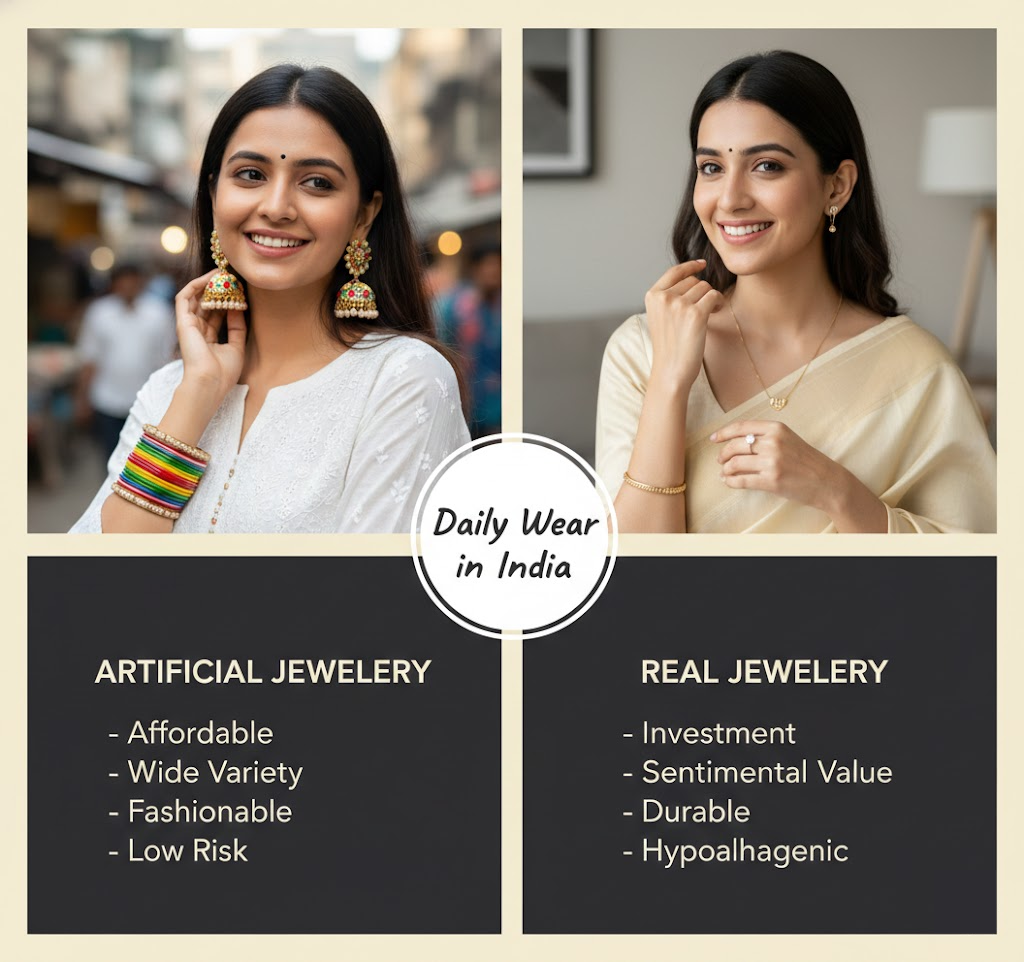
Introduction: Artificial Jewellery vs Real Jewellery
Artificial jewellery is better for daily wear in India for most people because it is affordable, lightweight, trend-friendly, and safer for everyday use. Real jewellery is better for investment and special occasions.
Now let’s break it down clearly.
In cities like Indore, where working professionals, college students, and homemakers prefer stylish yet affordable accessories, artificial jewellery priced between ₹220 and ₹3200 provides better daily practicality than gold or diamond jewellery.
What Is Artificial Jewellery?
Artificial jewellery, also called imitation jewellery or fashion jewellery, is made using materials such as:
- Alloy
- Brass
- Copper
- Gold-plated metal
- Synthetic stones
- Kundan and Polki replicas
It replicates the look of gold jewellery, diamond jewellery, and temple jewellery at a fraction of the cost.
What Is Real Jewellery?
Real jewellery is made from:
- 22K or 24K gold
- Sterling silver
- Platinum
- Natural diamonds
- Precious gemstones like ruby, emerald, sapphire
Gold rates in India (2026 average):
₹6,000–₹6,500 per gram (approx).
A simple gold chain (10 grams):
₹60,000+.
That price difference changes buying behavior.
Key Differences Between Artificial and Real Jewellery
| Factor | Artificial Jewellery | Real Jewellery |
|---|---|---|
| Price | ₹220–₹3200 | ₹10,000–₹2,00,000+ |
| Weight | Lightweight | Heavy |
| Resale | No resale value | High resale value |
| Trend Flexibility | Very high | Limited |
| Theft Risk | Low | High |
| Maintenance | Moderate | High polishing cost |
Price Comparison in India
If you wear jewellery daily, consider cost per usage.
Example:
Gold earrings (₹20,000) worn 200 days/year
Cost per wear ≈ ₹100
Artificial earrings (₹400) worn 200 days
Cost per wear ≈ ₹2
Artificial jewellery reduces daily wear cost by 95%.
Which Jewellery Is Better for Daily Wear?
Artificial jewellery is better for daily wear because:
- It reduces financial risk.
- It matches fast-changing fashion.
- It prevents stress about theft.
- It offers wider style options.
Real jewellery is better only if you prioritize investment and heritage value.
Comfort and Weight Comparison
Gold jewellery is dense and heavy.
Artificial jewellery manufacturers design:
Hollow structures
Lightweight alloy bases
Adjustable clasps
For office wear in Indore’s humid climate, lightweight jewellery prevents neck strain and sweat irritation.